If you have ever watched a child canter across a school playground — arms outstretched, hair flying, entirely unbothered by anyone watching — you have witnessed the horse girl meaning in its purest form. Long before the phrase became a meme, a dating-app warning, or a Netflix film title, it described something genuine: a person whose inner world orbits, almost gravitationally, around horses. This article sets out to give that identity the serious, warm, and thorough treatment it deserves — because the horse girl is far more interesting, and far more complex, than any punchline suggests.
The Horse Girl Meaning, Properly Defined
At its most straightforward, horse girl meaning refers to a girl or woman for whom horses are not merely a hobby but a defining passion — one that colours her vocabulary, her wardrobe, her weekend plans, and often her entire emotional landscape. The term is most commonly applied to those who ride, own, or work with horses, but it extends, generously, to anyone whose love of the animal is deep and sincere.
In internet culture, the phrase gained traction in the early 2010s as a shorthand for a particular archetype: quiet, intense, slightly outside the mainstream, and absolutely certain that horses are the superior species. It appeared on forums, in memes, and eventually in the title of a 2020 Netflix film (Horse Girl, directed by Jeff Baena) — though that film used the trope as a launching point for something far darker and more surreal than the community it nodded to.
The equestrian terms glossary at The Equestrian Journal covers the formal language of the sport; "horse girl" sits outside that lexicon, belonging instead to the living, breathing culture that surrounds it.
Where Did the Stereotype Come From?
The horse girl archetype did not emerge from nowhere. It reflects something sociologically real: horses have historically been one of the few high-intensity, technically demanding pursuits actively encouraged for girls, at a time when many sports remained male-dominated. The result was generations of girls who poured extraordinary commitment, physical courage, and emotional intelligence into an animal relationship that peers outside the stable often found baffling.
The British Horse Society, one of the UK's leading equestrian welfare and education bodies, notes that equestrianism consistently attracts a high proportion of female participants at grassroots level — a pattern reflected across most Western nations. That concentration of passionate girls around a single pursuit made the archetype visible enough to name.
The stereotype that followed — socially awkward, obsessive, faintly odd — was, as stereotypes tend to be, a lazy reduction of something richer. What observers outside the yard saw as obsession was, from the inside, discipline, empathy, and a vocabulary of non-verbal communication most people never develop.
The Spectrum: From Stable Girl to Grand Prix Rider
One of the gaps that competitors in this space tend to miss is that "horse girl" is not a monolith. The identity spans an enormous range:
The Childhood Horse Girl
She has never sat on a real horse but owns every Breyer model ever made, can identify fifteen breeds on sight, and has read Black Beauty so many times the spine has given up. Her bedroom walls are a gallery of equine portraiture. She is, in every meaningful sense, a horse girl.
The Riding School Regular
She books her lesson weeks in advance, knows every horse in the yard by name and temperament, and spends more time thinking about her rising trot than about anything else in her life. She may not own a horse, but the yard is her community and her sanctuary.
The Amateur Owner
She works full-time, keeps her horse at a DIY livery yard, and rises at five on winter mornings to break ice on the water trough before driving to the office. Her car smells of hay. Her phone wallpaper is her horse. If you are looking for a beautifully crafted iPhone case that reflects that identity without apology, you already understand her aesthetic instincts.
The Competitive Equestrian
She may compete in dressage, show jumping, eventing, endurance, or any number of other disciplines. She uses technical language fluently — collection, impulsion, half-pass, flying change — and she would bristle, rightly, at being reduced to a meme. And yet, privately, she will almost certainly call herself a horse girl.
The Professional
Trainers, grooms, yard managers, equine vets, farriers — women who have turned the passion into a career. The horse girl identity, for them, is the origin story of everything.
What Does "Horse Blanket Girl" Mean?
The horse blanket girl meaning is a delightful sub-category of the broader identity. It refers specifically to someone whose devotion to their horse's physical comfort and care is so complete that it becomes a defining characteristic — usually expressed through an intimate familiarity with horse rugs (called blankets in American English).
A horse blanket girl knows, without checking, whether her horse needs a 100g liner or a 300g heavyweight on any given night. She owns more rugs than dresses. She can discuss the merits of different fill weights, waterproof ratings, and neck cover attachments with the same fluency a sommelier brings to Burgundy vintages. She does not find this unusual.
The phrase is used affectionately within the community and points to something important: horse ownership is, at its core, an act of sustained, unglamorous care. The horse blanket girl is not performing a lifestyle. She is living one.
The Meme, the Jokes, and the Cultural Moment
It would be dishonest to discuss the horse girl identity without acknowledging the meme culture that has grown up around it. The jokes — "she's a horse girl," delivered as a dating-app red flag — proliferated on Reddit, TikTok, and Twitter through the late 2010s and early 2020s. The Reddit thread on r/Bumble asking "what in the world does 'horse girl' mean?!" is a useful document of that moment of cultural confusion.
What is striking, reading those threads now, is how much of the anxiety was projection. The qualities cited as alarming — intensity, single-mindedness, willingness to prioritise an animal over social convenience — are, in most other contexts, called passion, loyalty, and integrity.
The equestrian community's response has been, broadly, to shrug and carry on. Many riders adopted the label cheerfully, posting barn selfies and muddy-boot content under #horsegirl with evident pride. The reclamation was not organised; it was simply the natural response of a community that had never needed outside validation in the first place.
Why Equestrians Are Reclaiming It
The reclamation of "horse girl" as a positive identity is not merely a social media trend. It reflects something deeper about what the horse–human relationship actually does to a person.
Research in the field of equine-assisted therapy — conducted by organisations including the PATH International (Professional Association of Therapeutic Horsemanship) — consistently demonstrates that working with horses builds measurable emotional regulation, empathy, and self-confidence. These are not soft outcomes. They are the documented results of a relationship that demands you show up honestly, because horses, famously, cannot be fooled.
A horse girl who has spent years learning to read an animal's body language, manage her own anxiety in the saddle, and earn the trust of a 500-kilogram creature has developed capabilities that no amount of classroom instruction replicates. Reclaiming the label is simply an act of accurate self-description.
For those whose identity is bound up in the bond with a specific horse — their name, their personality, their quirks — that relationship often deserves to be marked in some tangible way. A custom piece that honours your horse's name or silhouette is one quiet, lasting way to carry that bond with you.
The Aesthetic: What Does a Horse Girl Look Like?
The horse girl aesthetic has become a recognisable visual language, particularly on platforms like Pinterest and Instagram. Its hallmarks include:
- Earth tones and natural materials — tan, cognac, forest green, navy; leather, wool, linen
- Practical elegance — clothes that work in a yard but translate to a coffee shop; think tailored jodhpurs, quality boots, Barbour-style wax jackets
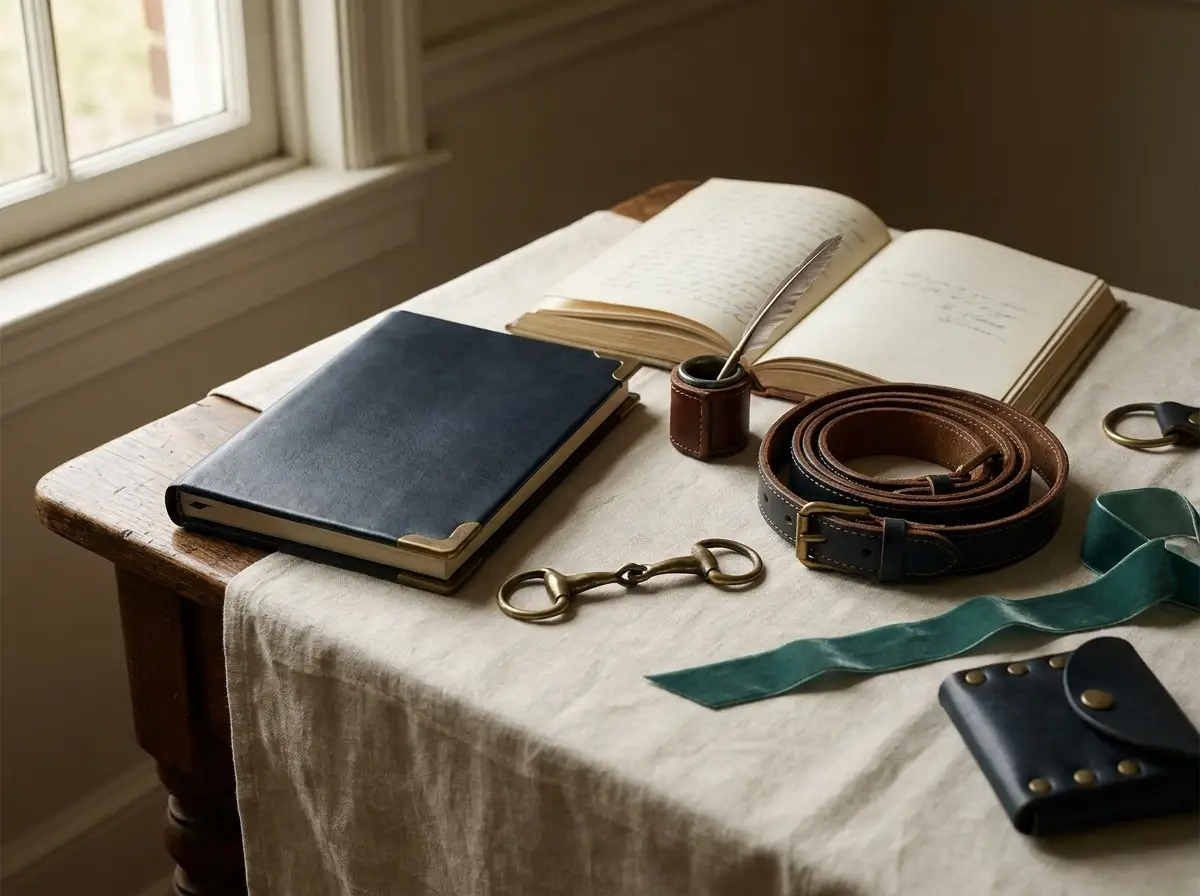
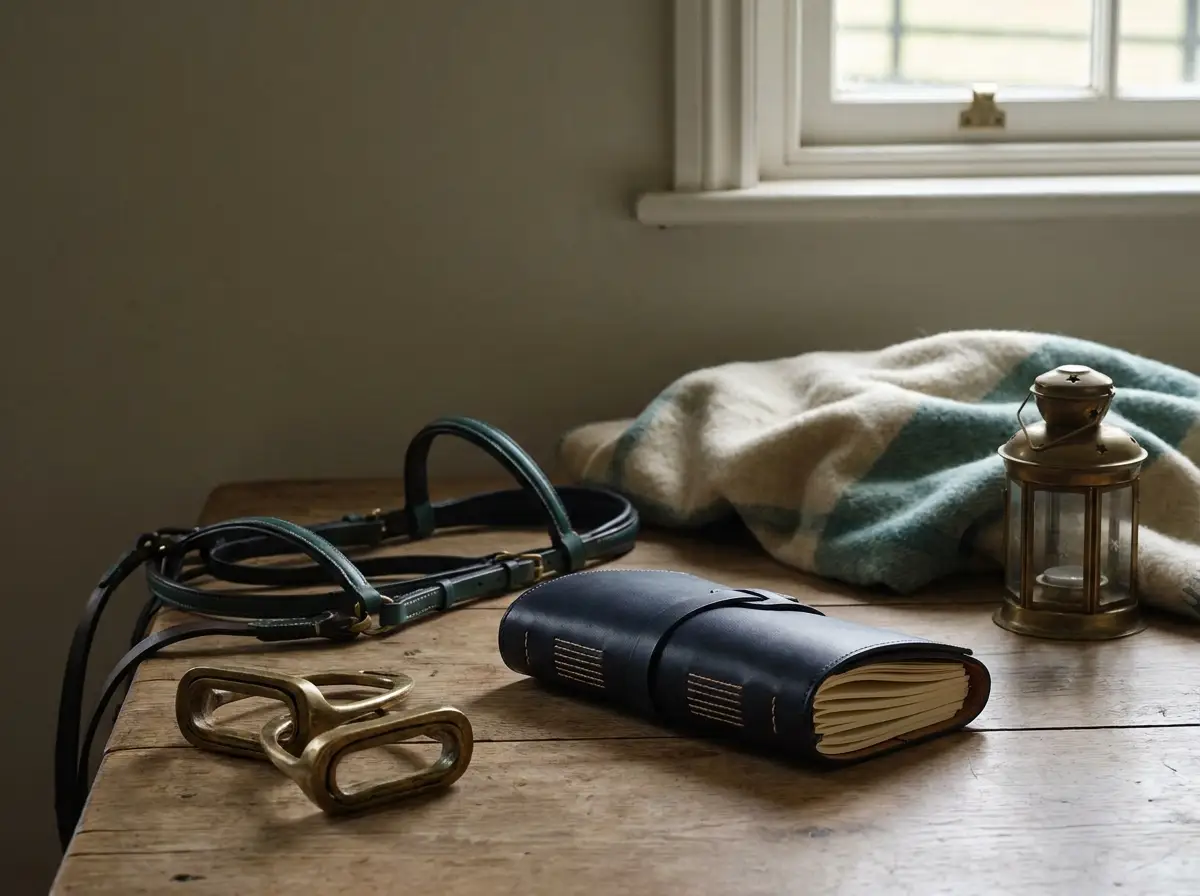
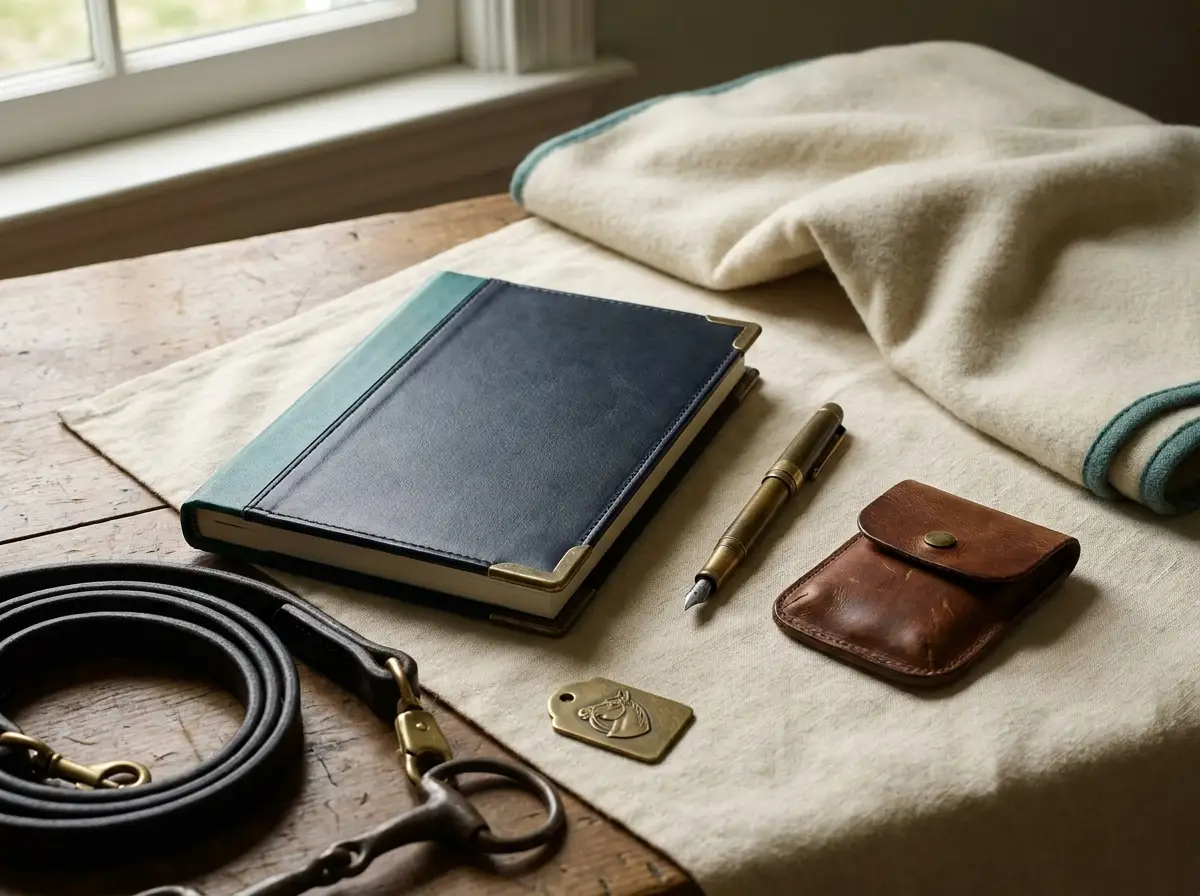
- Equestrian hardware — snaffle-bit details, stirrup motifs, bridle leather textures
- Understated luxury — the horse girl aesthetic is not ostentatious; it values quality and longevity over trend
This is, notably, precisely the world that Velvet & Valor inhabits. Full-grain leather, artist-designed, built to last — these are horse girl values applied to everyday objects.
The aesthetic also explains why the horse girl identity overlaps so naturally with an interest in what "equestrian" actually means as both a practice and a cultural tradition. The word carries centuries of horsemanship history, and the horse girl, whether she knows the etymology or not, is heir to all of it.
Naming Your Horse: A Horse Girl Rite of Passage
No discussion of the horse girl identity is complete without acknowledging one of its most personal rituals: naming a horse. Whether you are choosing a name for a new mare, a rescue with a yard name that never quite suited her, or a foal whose personality is still revealing itself, the process is treated with genuine reverence.
A Final Word on the Label
The horse girl meaning has travelled a long way — from playground galloping to internet meme to reclaimed identity — and it has arrived somewhere rather good. It describes a person of unusual dedication, genuine empathy, and a relationship with the natural world that most people only encounter at a distance.
If someone calls you a horse girl, the correct response is a quiet smile and a return to whatever you were doing, which was probably something involving a horse. That, in the end, is the most horse girl response of all.