A silicone phone case picks up the evidence of your day with remarkable efficiency — saddle dust, hand cream, coffee, the oils from your fingertips. If you have ever pulled your case off to find a ghostly outline of grime beneath it, you will know exactly what that means. The good news is that learning how to clean silicone phone case properly takes less than ten minutes, requires nothing more exotic than items already in your kitchen, and — done consistently — keeps the case looking respectable for considerably longer. This guide covers every method, every stain type, and every common mistake, so you never have to guess again.
Why Silicone Cases Get So Dirty So Quickly
Silicone is a synthetic polymer prized for its flexibility, grip, and shock absorption. Those same properties, however, make it a magnet for particulate matter. The slightly tacky surface that keeps your phone from sliding off a stable door ledge is the very same surface that traps lint, dust, and skin oils.
Unlike the smooth, closed grain of full-grain leather — the material used in Velvet & Valor's handcrafted iPhone cases — silicone has a microscopically porous texture that holds contaminants rather than shedding them. Understanding this helps you clean it correctly: you are not merely wiping a surface, you are drawing grime out of a texture.
There are broadly three categories of dirt a silicone case accumulates:
- Surface oils and bacteria — transferred from hands, ears, and face during normal use
- Environmental debris — dust, pollen, stable bedding, arena sand
- Staining agents — ink, food dye, makeup, tinted leather dyes from other accessories
Each responds slightly differently to cleaning, which is why a single method rarely addresses everything.
What You Will Need Before You Start
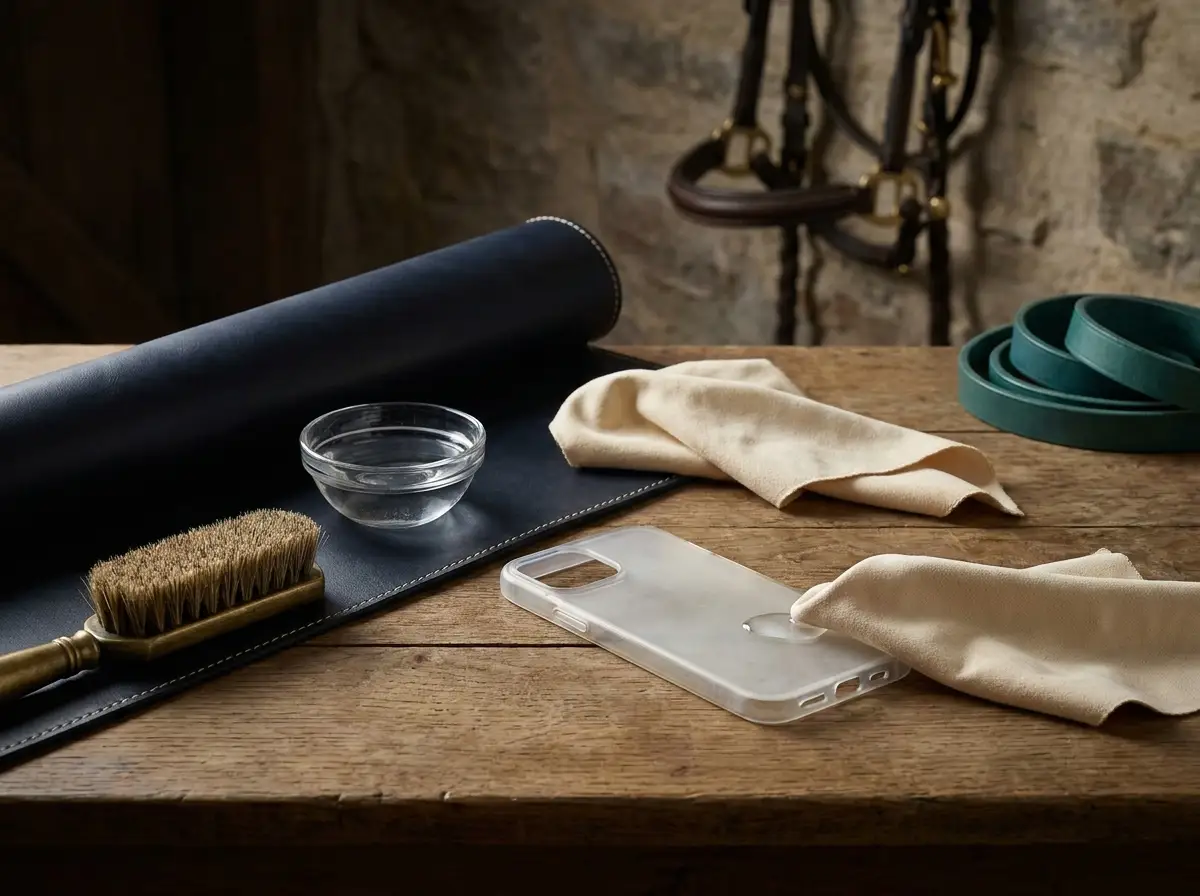
You do not need specialist products. The following covers every scenario in this guide:
- Washing-up liquid (mild, fragrance-free preferred)
- Warm water and a clean bowl
- A soft-bristled toothbrush (old but clean)
- Baking soda (bicarbonate of soda)
- 70% isopropyl alcohol and cotton pads
- White toothpaste (non-gel)
- 3% hydrogen peroxide (available from pharmacies)
- Clean microfibre cloths
Always remove the case from your phone before cleaning. Even a small amount of moisture introduced around the charging port or speaker grilles is avoidable with this simple step.
How to Clean a Silicone Phone Case: The Everyday Method
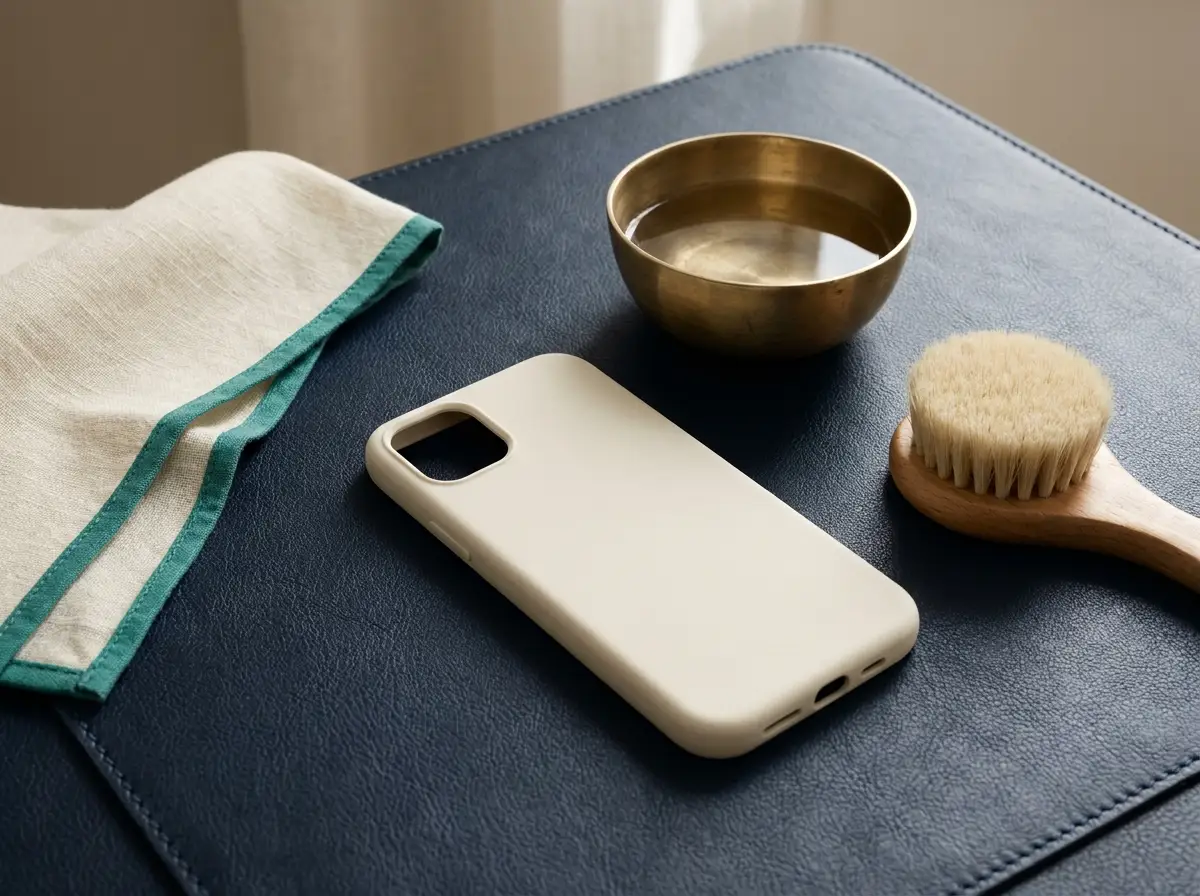
For routine maintenance — the weekly clean that prevents serious build-up — warm soapy water is all you need.
- Fill a bowl with warm (not hot) water and add two or three drops of washing-up liquid.
- Submerge the case and work it gently between your fingers for thirty seconds, paying attention to the corners and button cutouts.
- Use the toothbrush to scrub the textured back surface using small circular motions. This is the step most guides omit, and it makes a meaningful difference to how clean the case actually becomes.
- Rinse thoroughly under clean running water until no soap residue remains. Soap left behind creates a film that attracts more dirt.
- Pat dry with a microfibre cloth and leave the case to air-dry fully — ideally for an hour — before putting it back on your phone.
This method is safe for all silicone colours and finishes, including clear and white cases, and can be repeated as often as needed without degrading the material.
How to Clean a Yellow Silicone Phone Case
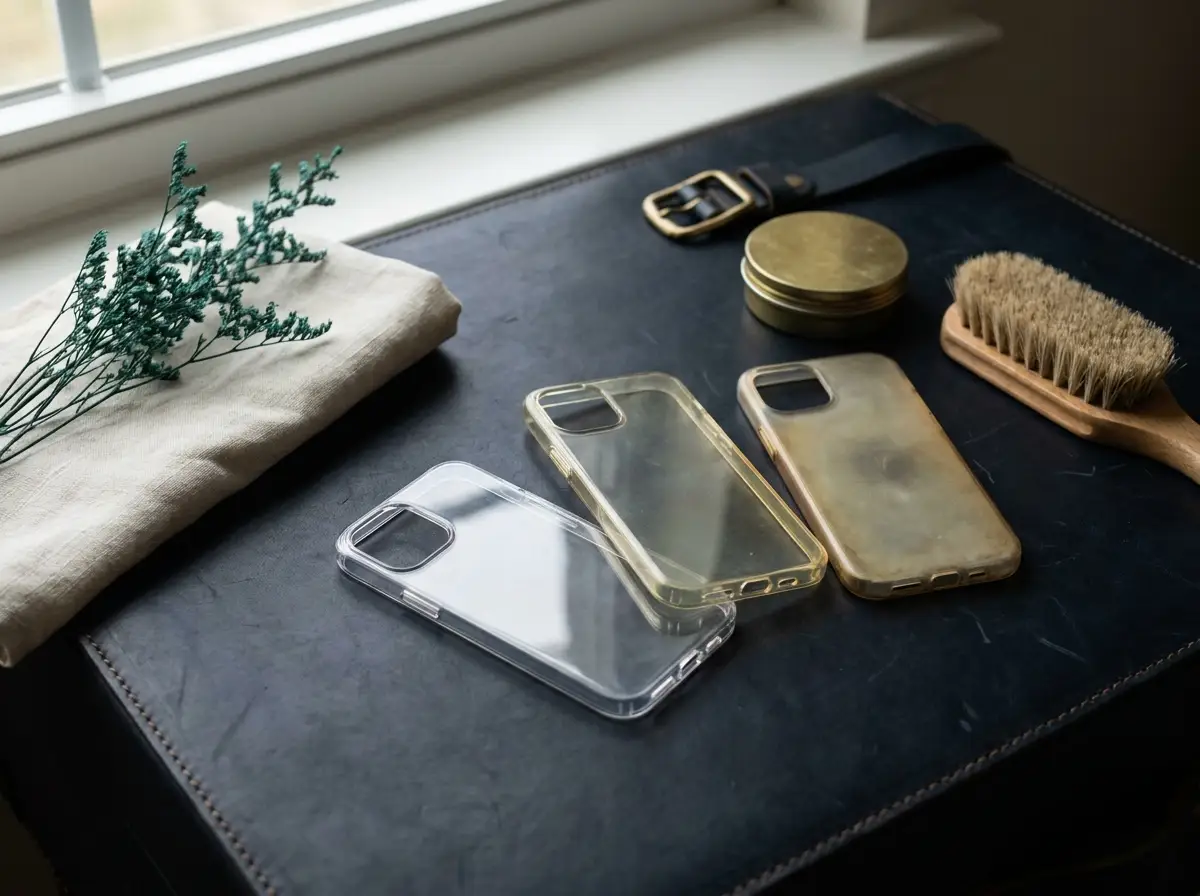
Yellowing is the most commonly searched silicone case problem, and it deserves an honest answer: there are two types of yellowing, and only one is truly reversible.
Surface yellowing is caused by the accumulation of oils, sweat, and environmental pollutants on top of the silicone. This type cleans away with the methods below.
Structural yellowing is caused by UV-induced oxidation of the silicone polymer itself — the material has chemically changed. This is permanent. You can lighten it, but you cannot restore the original clarity. Our companion article Why Do Clear Cases Turn Yellow? goes into the chemistry in detail if you would like to understand the process more fully.
Baking Soda Paste Method
This is the most effective home remedy for surface yellowing and is gentle enough for regular use.
- Mix two tablespoons of baking soda with enough water to form a thick paste.
- Apply generously to the yellowed areas using the toothbrush.
- Scrub in circular motions for two to three minutes.
- Rinse thoroughly and air-dry.
Hydrogen Peroxide Method (for stubborn yellowing)
Pharmacies sell 3% hydrogen peroxide, which is safe for skin contact and gentle enough for silicone. Apply to the case with a cotton pad, leave for five minutes, then rinse well. Do not use concentrations higher than 3%, and do not leave it on for longer than ten minutes — prolonged exposure can begin to degrade the surface.
What to Avoid
- Bleach — corrosive to silicone polymers and can cause brittleness
- Acetone or nail-polish remover — will dissolve silicone surface coatings
- Abrasive scrubbing pads — create micro-scratches that trap more dirt
How to Clean a White or Coloured Silicone Phone Case
White and pale-coloured silicone cases show every mark with unforgiving clarity. The cleaning method is the same as above, but a few additional considerations apply.
For white cases, the baking soda paste method is your first line of attack for any discolouration. White toothpaste (non-gel, non-whitening formula) also works well as a mild abrasive — apply with the toothbrush, scrub gently, and rinse.
For coloured cases, be cautious with hydrogen peroxide, as it can cause slight fading in vibrant pigments with repeated use. Stick to the soap-and-water method for routine cleaning, and use isopropyl alcohol on a cotton pad for spot-treating specific stains.
For clear cases, the same yellowing advice above applies. Clear silicone is the most susceptible to UV degradation, so storing your phone away from direct sunlight when not in use genuinely extends the case's useful life.
How to Clean a Dirty or Stained Silicone Phone Case
Some stains need a targeted approach:
| Stain Type | Recommended Treatment |
|---|---|
| Ink | 70% isopropyl alcohol on a cotton pad, dabbing rather than rubbing |
| Makeup / foundation | Washing-up liquid paste applied with a toothbrush |
| Food / coffee | Warm soapy water; baking soda paste for residual colour |
| Leather dye transfer | Isopropyl alcohol, then soap wash |
| Sunscreen | Washing-up liquid; may require two or three cycles |
For deeply embedded staining that persists after two or three attempts, it is worth being realistic: some stains have bonded with the silicone polymer and will not release. This is one of the material's genuine limitations.
How to Keep a Silicone Phone Case Clean for Longer
Prevention is considerably less effort than remediation. These habits make a measurable difference:
- Wash your hands before handling your phone — hand cream and food residue are the primary sources of silicone staining
- Avoid leaving the case in direct sunlight, such as on a car dashboard, which dramatically accelerates UV yellowing
- Wipe the case down with a dry microfibre cloth at the end of each day
- Remove the case monthly and clean the interior, where moisture and debris accumulate invisibly
- Store away from leather goods with strong dye lots, as dye transfer onto pale silicone is a common and often irreversible problem
If you ride or work around horses, your case faces a particular challenge: sweat, leather conditioner, and arena dust are all present in abundance. A weekly clean is a reasonable minimum, and choosing a case material that is inherently resistant to these conditions — as full-grain leather is — may simply be the more practical long-term decision.
When Cleaning Is No Longer Enough
There is a point at which a silicone case has degraded beyond the reach of any cleaning method. Signs that you have reached it include:
- Persistent stickiness that returns within hours of cleaning
- Structural yellowing that no longer responds to hydrogen peroxide
- Tearing or deformation around button cutouts
- A texture that feels rougher than when new, indicating surface breakdown
At this point, replacing the case is the honest answer. If you find yourself replacing silicone cases frequently, it is worth considering whether the material is the right choice for your lifestyle in the first place.
Full-grain leather does not yellow, does not develop that characteristic silicone tackiness, and improves in character with age rather than degrading. For those who spend time outdoors, around animals, or simply want a case that rewards long-term ownership, the contrast is significant. If you have a particular horse, yard, or personal aesthetic in mind, Velvet & Valor's custom programme allows you to commission a case that reflects that connection — something no silicone case can offer.
For a broader look at caring for all case types, our guide on how to clean a phone case covers leather, clear plastic, and fabric alongside silicone in one place.
A Note on Sanitising vs. Cleaning
These are not the same thing, and conflating them leads to over-use of harsh products. Cleaning removes visible dirt and oils. Sanitising reduces microbial load. For most users, a thorough soap-and-water clean achieves both to a practical standard — soap is genuinely effective at disrupting bacterial cell membranes, which is why handwashing guidance from bodies such as the NHS emphasises soap over hand sanitiser for thorough cleaning.
If you want to sanitise after illness, a wipe with 70% isopropyl alcohol after a full soap wash is appropriate. This two-step approach — clean first, then sanitise — is more effective than using alcohol alone, because alcohol cannot penetrate a layer of organic material (oils, grime) to reach the surface beneath.
Routine sanitising with alcohol as a substitute for proper cleaning will degrade your silicone case faster than ordinary use. Clean thoroughly, sanitise occasionally, and your case will last as long as the material is capable of lasting.