Pick up any clear phone case that has lived in a pocket or saddle bag for a few months and the story writes itself: what began as pristine transparency has softened into an unmistakable straw-coloured tinge. It is one of the most common grievances among smartphone owners, and yet the explanation is rarely given in full. Understanding why do clear cases turn yellow — properly, at the chemistry level — means you can make a genuinely informed choice about materials, habits, and whether a clear case is the right long-term investment for your phone at all.
Why Do Clear Cases Turn Yellow: The Chemistry Explained
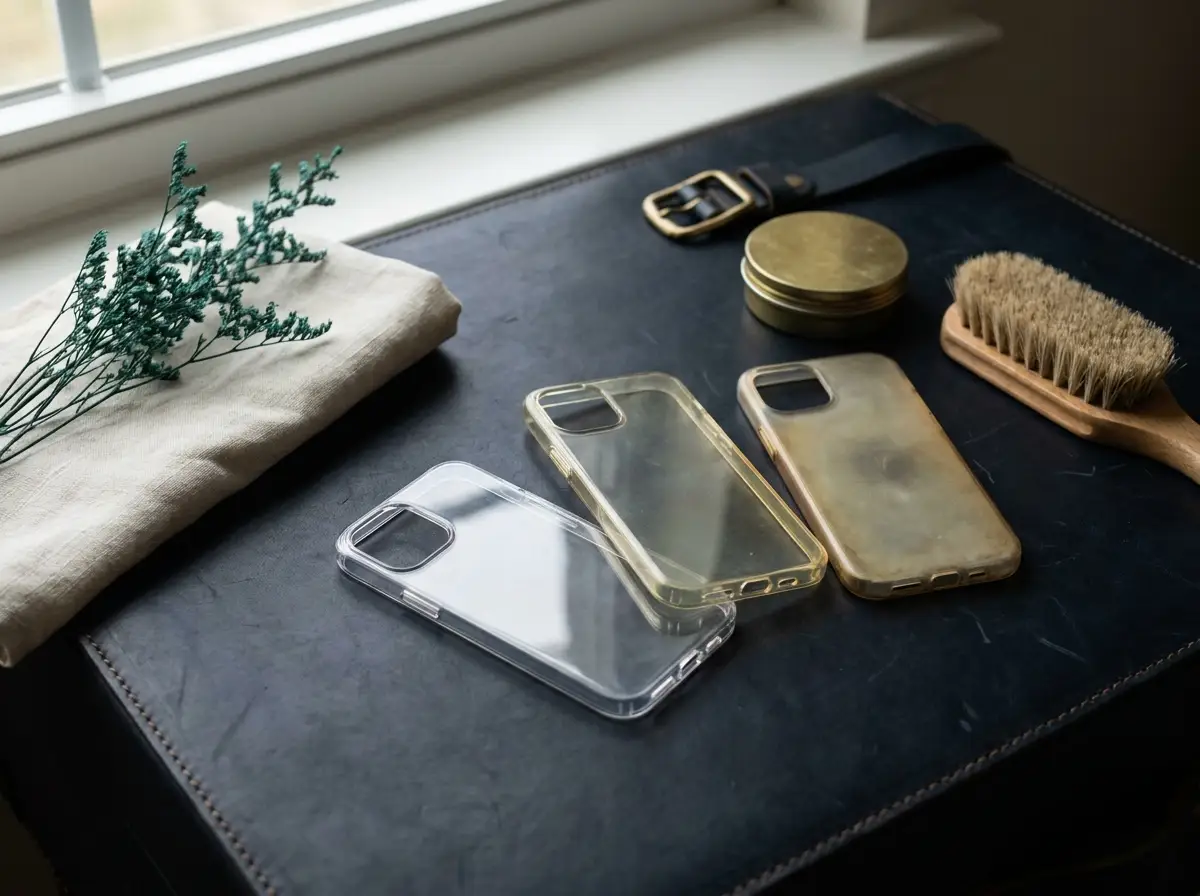
The short answer is photo-oxidation. Most clear phone cases are made from thermoplastic polyurethane (TPU), a polymer that is prized for its flexibility and grip but contains molecular bonds — specifically the urethane linkages — that are vulnerable to ultraviolet radiation. When UV photons strike those bonds, they trigger a chain of oxidation reactions that alter the polymer's structure, producing chromophores: molecular fragments that absorb visible light and reflect it back as yellow.
This is not a surface phenomenon. The reaction propagates through the material itself, which is why wiping the case clean does nothing to reverse it. Heat compounds the problem: elevated temperatures (from a warm pocket, a sun-baked car dashboard, or a wireless charger) accelerate the oxidation rate and can also cause the plasticisers within the polymer to migrate toward the surface, leaving the material both discoloured and slightly tacky.
A second, distinct mechanism involves dye transfer. Denim, leather goods, and even certain saddle pads contain pigments that leach onto a soft TPU surface under pressure and warmth. This staining sits on top of the material rather than within it, and it is often mistaken for yellowing — though in practice most cases suffer from both simultaneously.
The Role of UV Light
Sunlight is the single largest accelerant. UV-A radiation (wavelengths 315–400 nm) penetrates glass and clouds, meaning a case resting on a windowsill or a stable yard fence rail is being degraded even on an overcast day. UV-B (280–315 nm), though partially filtered by glass, is more energetically damaging per photon and dominates during outdoor exposure.
Manufacturers of higher-end clear cases address this with UV stabilisers — additives such as hindered amine light stabilisers (HALS) or benzophenone derivatives that absorb UV energy before it reaches the polymer chains. These additives are real and effective, but they are consumed over time; they buy months, not years. Budget cases often omit them entirely to reduce cost, which is why a £5 TPU case from a market stall may yellow visibly within weeks.
Material Matters: TPU vs Silicone vs Polycarbonate
Not all clear cases are made equally, and the material choice has a profound effect on how quickly discolouration sets in.
TPU (Thermoplastic Polyurethane)
The most common clear-case material. Flexible, shock-absorbent, and inexpensive to mould. Unfortunately, its urethane bonds are among the most UV-sensitive of common polymers. Without UV stabilisers, yellowing is rapid.
Silicone
Pure silicone (polydimethylsiloxane) has a silicon-oxygen backbone rather than carbon-carbon bonds, making it inherently more UV-resistant. Clear silicone cases yellow more slowly than TPU, though they are prone to attracting lint and can still discolour from dye transfer. Apple's own clear silicone-adjacent cases have historically received mixed reviews on longevity, suggesting that formulation quality varies even within the same material family.
Polycarbonate (PC)
Hard polycarbonate is more resistant to UV-induced yellowing than TPU in the short term, but it is brittle and offers less impact absorption on its own. Many cases combine a PC back panel with a TPU bumper — the PC back stays clearer longer, while the TPU edges are less visible and their yellowing matters less aesthetically.
What About Anti-Yellowing Claims?
Some manufacturers market cases as "anti-yellowing" or "non-yellowing." In most cases this refers to the inclusion of UV stabilisers or a switch to a higher-grade TPU formulation. These cases do outperform standard TPU, but the claim of permanent clarity is marketing rather than chemistry. Independent reviews consistently show yellowing appearing within six to twelve months of heavy use, even in premium clear cases.
What Accelerates Yellowing — and What You Can Do
Understanding the causes gives you practical levers to slow the process.
Accelerants to minimise:
- Direct sunlight — do not leave your phone on a car dashboard, windowsill, or outdoor surface
- Body heat and pocket friction — heat from your body combined with the pressure of a tight pocket speeds both oxidation and dye transfer
- Denim and dark fabrics — indigo dye in denim is a notorious culprit for staining TPU; consider a phone pocket or pouch
- Harsh cleaning agents — bleach, acetone, and abrasive scrubs degrade the polymer surface and accelerate subsequent yellowing; stick to mild soap and water or isopropyl alcohol used sparingly (see our guide on how to clean a phone case for safe methods)
- Wireless charging heat — repeated MagSafe or Qi charging cycles add cumulative thermal stress; understand more about what MagSafe is and how it works if you charge wirelessly every day
Habits that help:
- Store your phone screen-down or in a fabric pouch when not in use outdoors
- Clean the case weekly with a damp microfibre cloth to remove oils before they can embed
- Replace the case every six to twelve months if clarity matters to you — clear cases are consumable items by nature
The Leather Atelier's Perspective
Here is an insight that rarely appears in mainstream tech coverage: the yellowing problem is entirely absent from the vocabulary of a traditional saddler or leather craftsperson, because full-grain leather does not contain polymer chains susceptible to photo-oxidation. Its ageing is governed by tannin chemistry, fat liquoring, and fibre compaction — processes that produce a deepening, darkening patina that the equestrian world has prized for centuries.
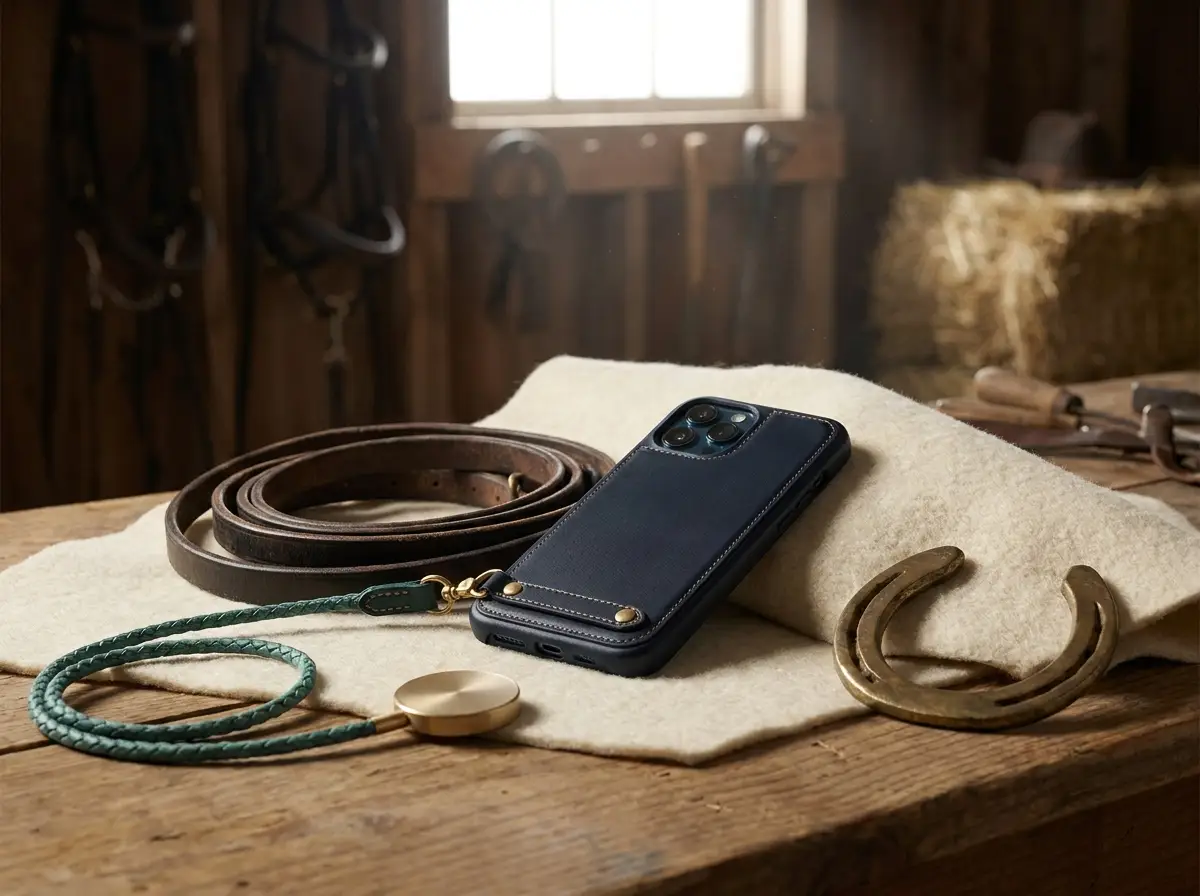
A bridle left in sunlight will dry and fade if untreated, but it will not turn a dismaying yellow. The correct response is conditioning with a quality leather balm — not replacement. This is the philosophy behind our handcrafted leather iPhone cases: rather than fighting an inevitable chemical degradation, the material improves with handling. The oils from your hands, the warmth of your pocket — these are the same forces that ruin a TPU case but enrich a piece of full-grain leather.
It is worth noting that the British Horse Society has long emphasised the importance of quality tack materials and regular conditioning in its horsemanship guidance — a philosophy of maintenance over replacement that translates naturally to how one ought to think about any leather accessory.
How to Slow Yellowing If You Already Own a Clear Case
If you have a clear case and want to extend its life, a structured cleaning routine is your best tool.
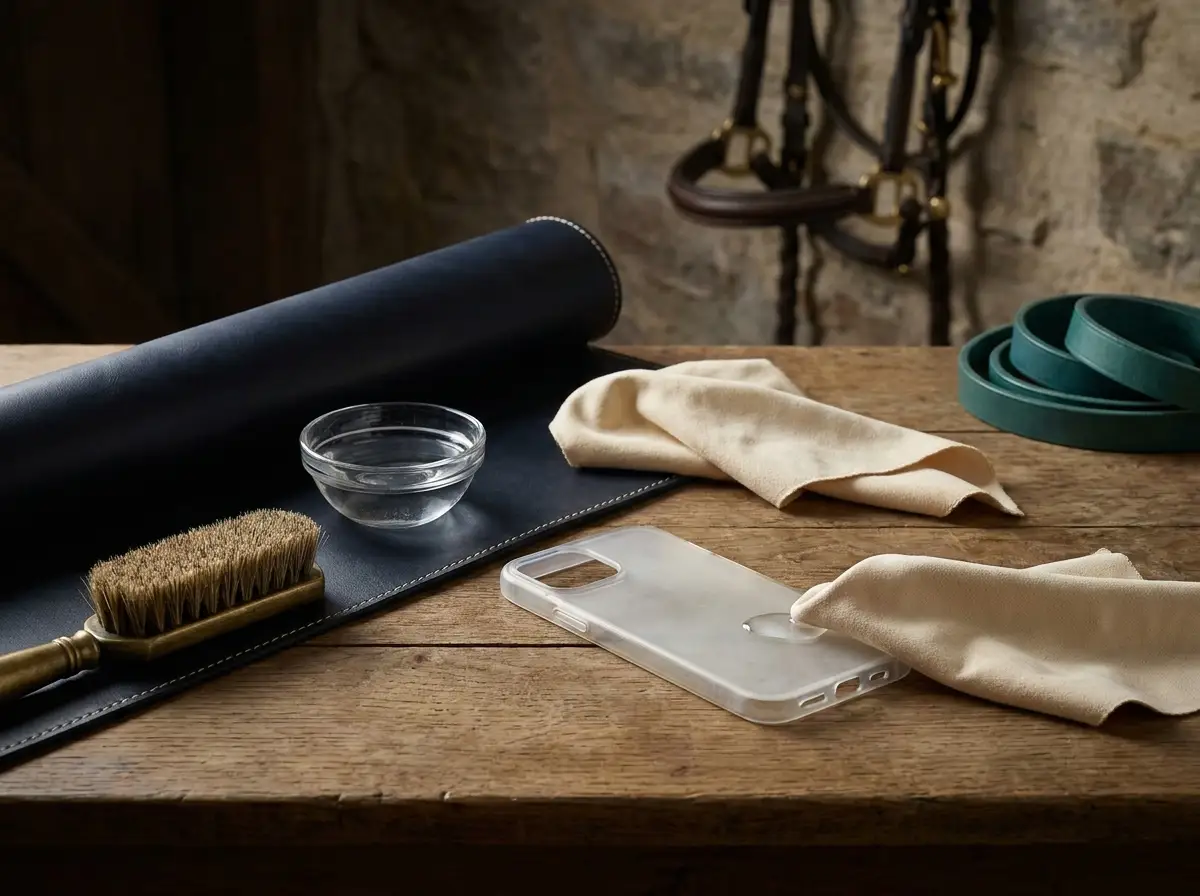
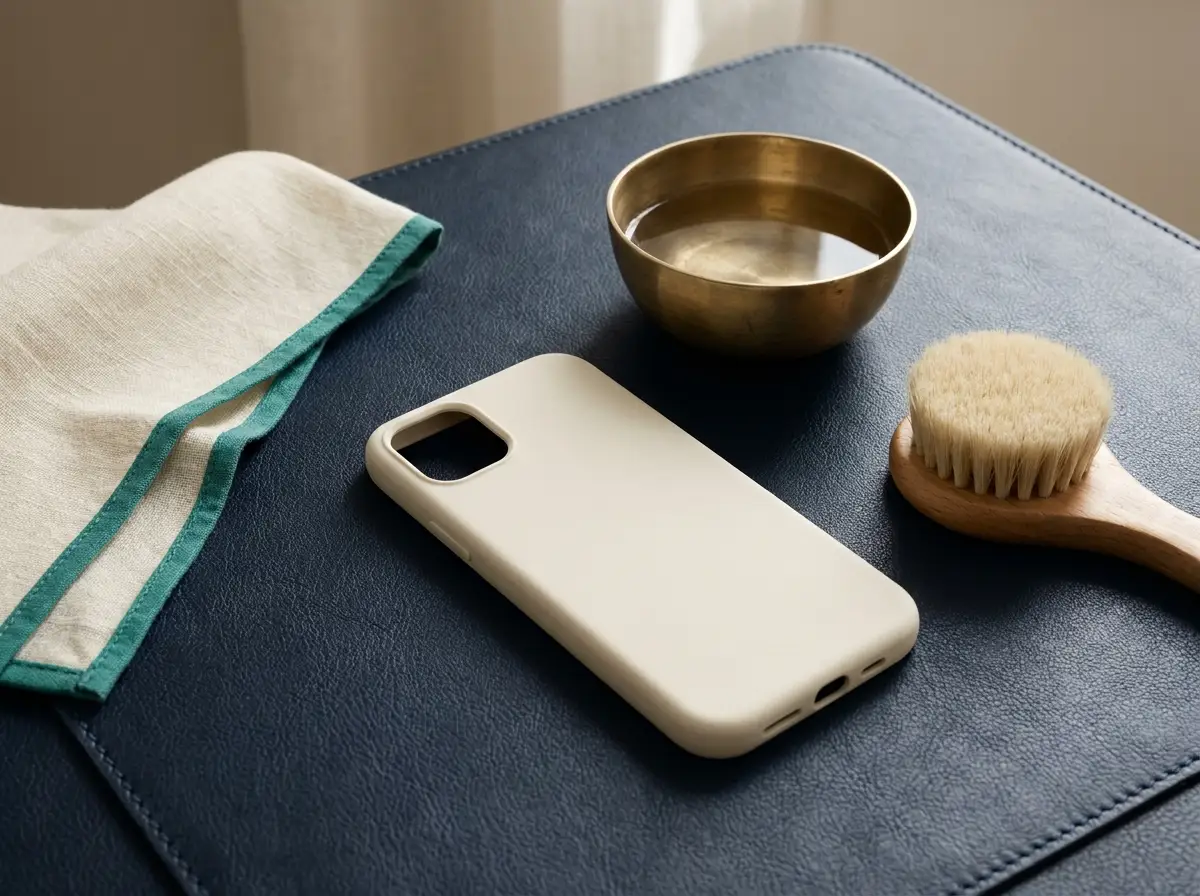
- Weekly wipe-down with a microfibre cloth dampened with warm water removes surface oils before they oxidise into the material
- Isopropyl alcohol (70%) applied sparingly on a cotton pad addresses dye staining and bacteria without aggressively attacking the polymer — do not soak the case
- Baking soda paste (bicarbonate of soda mixed with a little water) applied with a soft toothbrush can lift surface discolouration; rinse thoroughly and dry completely before replacing on the phone
- Avoid leaving the case in direct sunlight even when the phone is not in use — a case drying on a windowsill after cleaning is still being degraded
Be realistic about outcomes: these steps address surface contamination and slow further degradation. They cannot reverse the photo-oxidation that has already occurred within the polymer.
Choosing a Case That Does Not Have This Problem
If the yellowing cycle frustrates you — buy a clear case, watch it cloud over, replace it, repeat — it is worth asking whether transparent is the right choice at all. The appeal of a clear case is usually the desire to show the phone's original finish, but that calculus changes when the case itself becomes the eyesore.
Full-grain leather cases, artist-designed hardshell cases, and other opaque options sidestep the chemistry problem entirely. If you would like a case that is as individual as your horse, our custom design service allows you to work with our atelier to create something that carries personal meaning — a stable name, a horse portrait, or a detail from your favourite bridle — rather than a fading attempt at invisibility.
For those committed to the clear aesthetic, understanding MagSafe case compatibility is also worth your time, as the magnet array and wireless charging demands place additional thermal stress on the case material — a factor worth weighing when comparing options.
A Realistic Summary
Why do clear phone cases turn yellow? Because UV radiation and heat chemically alter the polymer they are made from, producing light-absorbing molecular fragments that cannot be cleaned or reversed — only slowed. The process is faster in budget TPU, slower in silicone and UV-stabilised materials, and entirely absent in non-polymer alternatives such as full-grain leather. No clear case lasts indefinitely; the question is how long you are willing to tolerate the decline, and whether the aesthetic trade-off is worth it.
The most durable, lowest-maintenance cases are those made from materials that age gracefully rather than those that resist ageing temporarily. That is not a marketing position — it is straightforward materials science, and it is the same principle that has kept quality saddlery in service for generations.