Pick up your iPhone and turn it over. Somewhere beneath that glass back — or behind the leather of a well-made case — sits a quiet piece of engineering that has changed the way millions of people charge and carry their phones. That feature is MagSafe, and if you have found yourself wondering what is a MagSafe case, you are in the right place. In short, a MagSafe case is a phone case built with a precisely arranged ring of magnets that aligns with Apple's internal charging coil, enabling faster wireless charging and a secure snap-on connection to a growing ecosystem of accessories — all without removing the case.
This guide covers everything: how the system works, which iPhones support it, what separates a genuinely good MagSafe case from a mediocre one, and why material choice matters more than most buyers realise.
How MagSafe Actually Works
Apple introduced MagSafe for iPhone with the iPhone 12 in 2020, repurposing a name it had previously used for MacBook charging connectors. The iPhone version is built around a ring of magnets embedded in the rear of the phone, arranged in a specific polarity pattern around a wireless charging coil. When you bring a MagSafe charger — or a MagSafe-compatible accessory — close to the back of the phone, the magnets snap together with satisfying precision, aligning the charging coils exactly and holding accessories firmly in place.
The magnet array explained
The magnet ring sits at roughly 55.5 mm in diameter. Apple has not published every detail of the polarity arrangement, but third-party manufacturers who achieve genuine MagSafe certification must replicate it faithfully. Cases that carry Apple's "Made for MagSafe" designation have been tested to confirm that their internal magnet ring does not interfere with the phone's own array — and that it does not reduce charging efficiency below Apple's thresholds.
Cases that claim to be "magnetic" without that certification may use fewer magnets, a weaker grade of magnet, or an imprecise arrangement. The result is a charger that sits on rather than snaps to the phone, and accessories that slide or detach under light pressure.
Charging speeds: what you actually get
- Standard Qi wireless charging: up to 7.5 W on iPhone
- MagSafe charging: up to 15 W on iPhone 12 and later (requires an Apple or certified MagSafe charger and a 20 W+ USB-C power adapter)
- Wired USB-C: up to 27 W with the right adapter and cable, making it the fastest option overall
The 15 W MagSafe rate is roughly double standard Qi, which is a meaningful real-world difference. For a fuller technical breakdown of the standard itself, the What Is MagSafe? Everything Explained article in this Journal covers the specification in detail.
Which iPhones Support MagSafe?
MagSafe is built into every iPhone from the iPhone 12 onwards, including all mini, Plus, Pro, and Pro Max variants. If your phone is an iPhone 11 or earlier, the hardware magnet ring is not present, and a MagSafe case will not provide the snap-on or fast-charging benefits — it will simply function as a standard case.
iPhones 12 through 15 all support 15 W MagSafe charging. The iPhone 16 range introduced support for up to 25 W MagSafe charging with a USB-C adapter rated at 30 W or higher, representing a step forward in wireless charging speed.
If you are unsure of your model, check Settings → General → About — the model name is listed there.
What Is MagSafe on a Phone Case, Physically?
A MagSafe case looks, from the outside, like any other slim case. The difference is inside: a thin annular ring of magnets is moulded or bonded into the case body, positioned to sit directly over the iPhone's own magnet array when the case is fitted. In well-made cases, this ring is invisible from the exterior and adds minimal bulk.
The key engineering challenge is material thickness. Wireless charging efficiency falls as the distance between the charger coil and the phone's coil increases. A case that is too thick — or that uses a material with poor magnetic permeability — will reduce charging speed or cause the charger to disconnect intermittently. Apple's own MagSafe guidelines specify a maximum case thickness for reliable 15 W charging, which is one reason why bulkier rugged cases often cap out at lower wireless charging rates even when they carry magnets.
This is where our handcrafted full-grain leather iPhone cases hold a genuine advantage. Full-grain leather, properly skived (thinned) at the edges and over the charging zone, sits within Apple's thickness tolerances while offering a material density and surface grip that synthetic alternatives rarely match.
What Is a MagSafe Case for iPhone — and What Makes One Good?
Not every case with a magnet ring earns the label. Here is what separates a well-executed MagSafe case from one that will frustrate you within a fortnight.
Magnet grade and arrangement
Higher-grade neodymium magnets hold accessories more firmly and snap more decisively. Cheaper cases use ferrite magnets or reduce magnet count to cut costs. You can test this simply: a good MagSafe case should hold a MagSafe wallet securely when the phone is held vertically and given a gentle shake. If the wallet slides, the magnets are underspecified.
Material choice
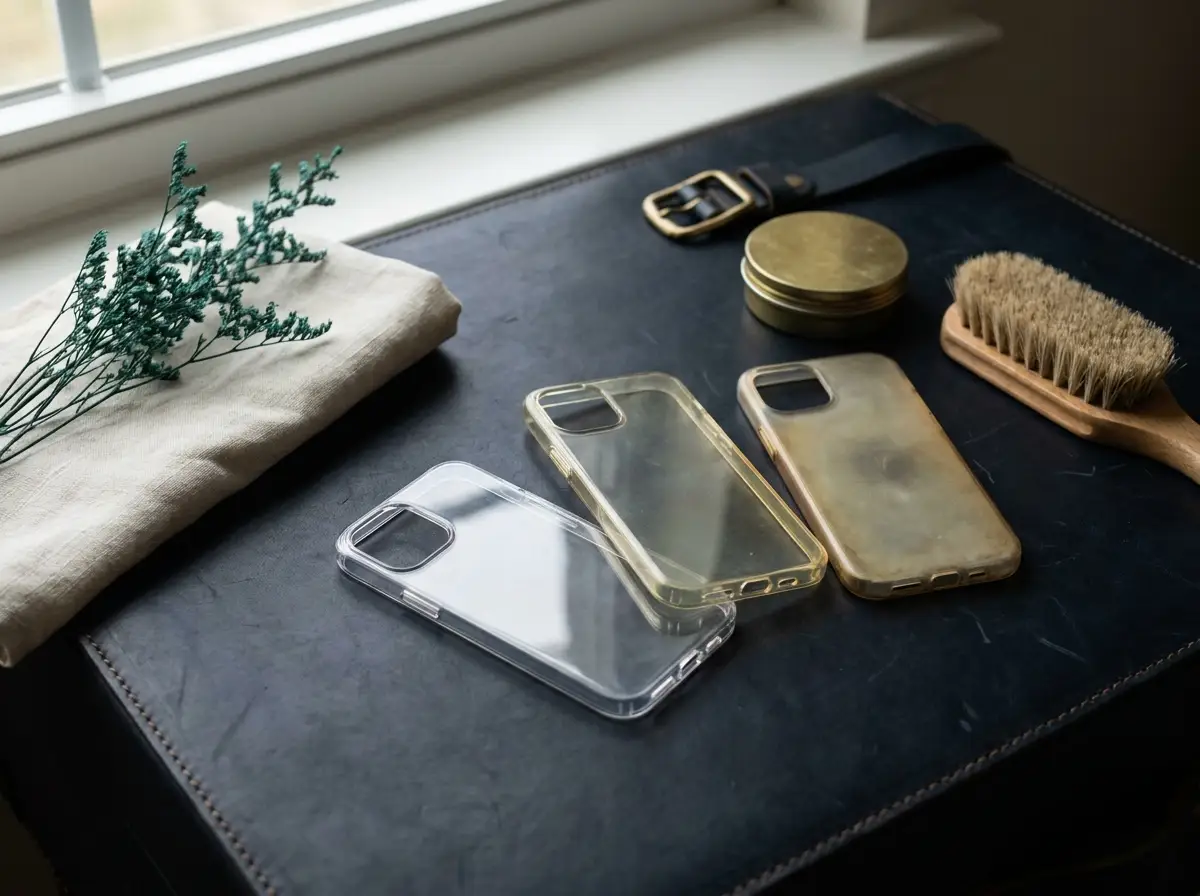
Silicone and TPU cases are the most common MagSafe case material. They are flexible, affordable, and generally thin enough to preserve charging speed. The drawback is longevity — silicone yellows and degrades with UV exposure and body oils, and TPU can stretch and lose its grip on the phone over time.
Polycarbonate cases are rigid and thin, which is good for charging efficiency, but they offer little natural grip and can crack under lateral impact.
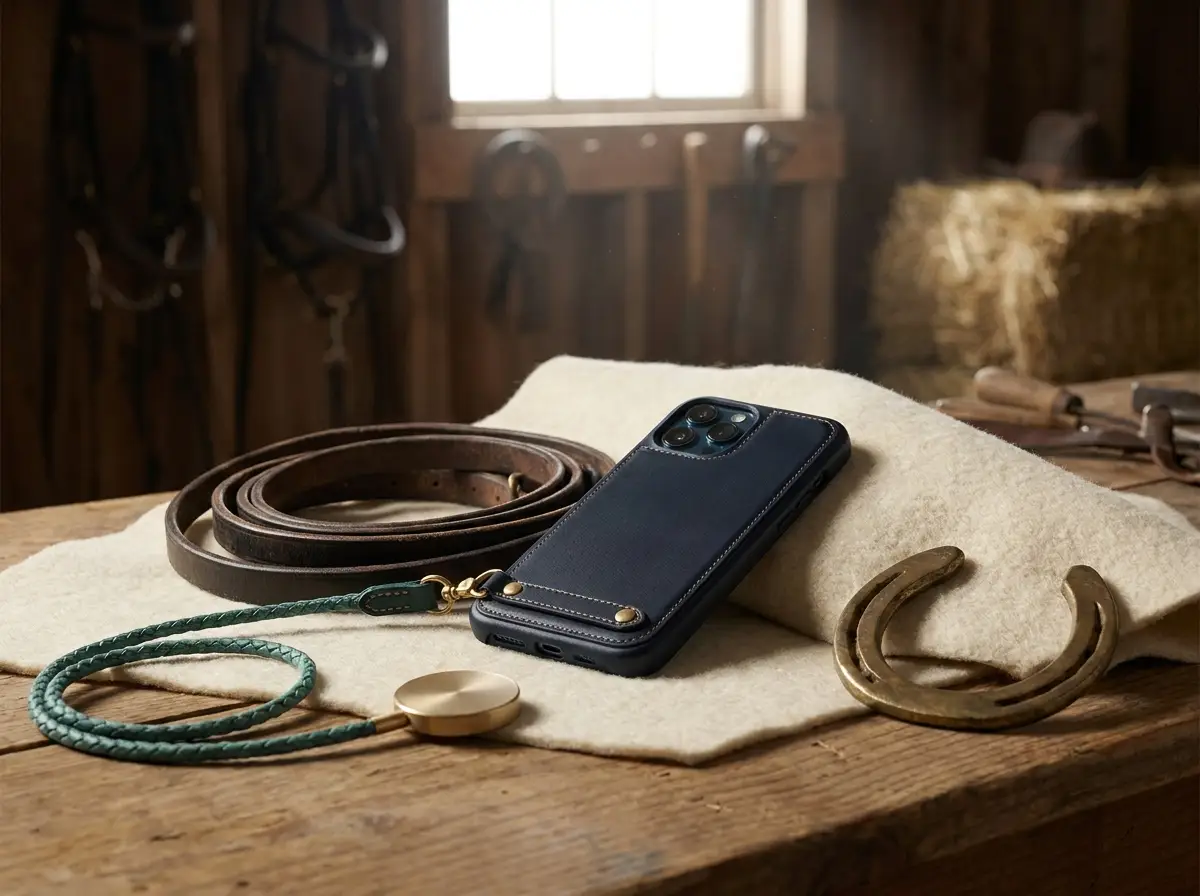
Full-grain leather is the material that practising saddlers and leather craftspeople will tell you behaves differently from the rest. Unlike bonded leather or PU leather — which are essentially split leather or fabric coated in polyurethane — full-grain leather is the outermost layer of the hide, with the grain intact. It is denser, more breathable, and develops a patina rather than peeling. Properly prepared and skived, it sits within MagSafe thickness tolerances while offering a hand-feel and durability that no synthetic replicates. A full-grain leather case made by an experienced atelier will outlast several generations of silicone alternatives.
Precision of fit
A MagSafe case must align the magnet ring with the phone's own ring within a narrow tolerance. Cases manufactured without precise tooling can place the magnet ring even a few millimetres off-centre, which reduces snap strength and charging efficiency noticeably. This is an area where handcrafted cases with controlled production runs have an advantage over mass-produced alternatives: each case is checked individually rather than assumed correct by the thousand.
Camera and button cutouts
MagSafe cases, like all cases, need accurate cutouts for the camera array, buttons, and ports. On leather cases in particular, these cutouts should be clean-edged and sealed to prevent moisture ingress at the leather's cut face.
What Is a MagSafe Charging Case — Is That Different?
The phrase MagSafe charging case can mean two things, and it is worth distinguishing them.
The first — and most common — meaning is simply a case that supports MagSafe charging: it has the magnet ring and does not impede wireless charging. This is what most people mean, and what this article addresses throughout.
The second meaning refers to Apple's own MagSafe Battery Pack, a separate accessory that clips magnetically to the back of the phone and provides supplemental battery capacity while on the go. That accessory is a product in its own right, not a case. It attaches to any MagSafe-compatible case and charges the phone at up to 5 W (or 7.5 W when the pack itself is plugged into power).
If you see a case marketed as a "MagSafe charging case," read the description carefully to confirm which meaning applies.
What Is a MagSafe Case for Samsung and Android?
This question comes up often, and the honest answer requires a distinction. MagSafe is Apple's proprietary ecosystem. Samsung, Google, and other Android manufacturers have their own wireless charging standards — Samsung uses a Qi-based system, and the Galaxy S and Z series support reverse wireless charging — but none of these is MagSafe.
That said, MagSafe-compatible adhesive rings are widely available: thin magnetic rings that adhere to the inside of any case, replicating the magnet array and enabling use of MagSafe accessories such as mounts and wallets. These work mechanically — the snap and hold function — but they do not enable 15 W MagSafe charging on Android phones, because that charging speed is governed by the phone's own hardware and Apple's protocol, not by the case alone.
If you own a Samsung and want to use MagSafe-style mounts or wallets, an adhesive ring inside your existing case is a practical solution. If fast wireless charging is your goal, look at Samsung's own ecosystem of Qi2 and wireless charging accessories instead.
MagSafe and Leather: A Craftsperson's Perspective
There is a detail that most MagSafe case guides overlook entirely, and it is one that anyone who has worked with leather in an equestrian or saddlery context will recognise immediately. Leather is a living material. It responds to temperature, humidity, and use. A full-grain leather case will feel different in January than in July — slightly stiffer in the cold, slightly more supple in warmth — and it will develop a patina unique to how you carry and handle it.
This behaviour is not a flaw. It is precisely why bridles, stirrup leathers, and fine saddlery are made from full-grain hide rather than synthetic alternatives: the material improves with care and becomes, over time, an object that fits its owner. The same principle applies to a leather iPhone case. The magnet ring embedded within does not change — it continues to perform exactly as the day the case was made — but the exterior becomes more distinctly yours.
For those who wish to take that personalisation further, our custom engraving service allows you to add initials, a horse's name, or a personal motif to the leather — a detail that transforms a well-made case into something genuinely singular.
Choosing the Right MagSafe Case: A Practical Summary
Before you purchase, ask yourself four questions:
- Does my iPhone support MagSafe? (iPhone 12 or later — yes. iPhone 11 or earlier — no.)
- What accessories do I plan to use? If you want a wallet, mount, or battery pack, confirm the case carries a certified magnet ring, not simply a decorative magnetic element.
- How much do I value longevity over initial cost? A well-made leather MagSafe case costs more upfront and lasts considerably longer than a silicone alternative that will need replacing within a year.
- Does case thickness matter for my charging habits? If you charge wirelessly every night, prioritise a case that sits within Apple's thickness tolerance for 15 W charging. If you mostly charge by cable, this is less critical.
Apple maintains a curated list of MagSafe-certified accessories, which is a useful reference when verifying whether a specific charger or accessory meets the standard. For the case itself, certification is worth confirming directly with the manufacturer before purchase.
A MagSafe case is, at its best, an invisible infrastructure upgrade: it makes charging effortless, keeps accessories exactly where you place them, and asks nothing of you beyond fitting the case once. The question is simply whether the case surrounding that magnet ring is worthy of the phone — and the person — it protects.